
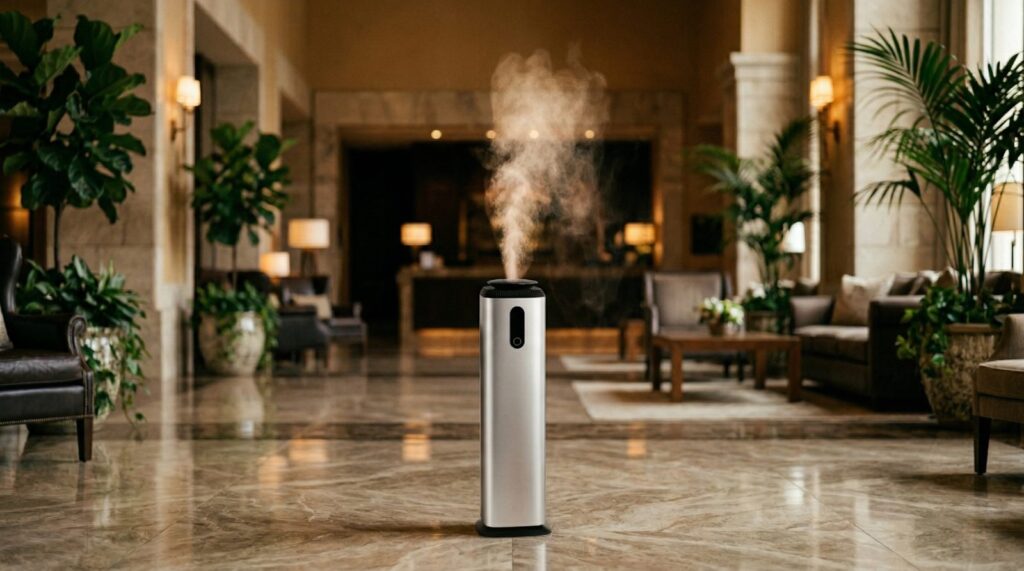
Walk into a well-run hotel lobby and you’ll notice the scent before you notice anything else. That’s not an accident. The best scents for hotels are chosen deliberately — to trigger a specific emotional response, reinforce brand identity, and make guests feel they’ve arrived somewhere worth remembering.
This guide covers the five fragrance categories that consistently perform in hospitality settings, how to match scent to space, and what purchasing managers need to know before placing an order.
Why Hotel Scent Strategy Matters More Than You Think
Research in consumer psychology consistently shows that scent is the sense most directly linked to memory and emotion. Hotels that use signature scents report higher guest satisfaction scores, stronger brand recall, and measurable increases in repeat bookings.
The best scents for hotels aren’t necessarily the most expensive or the most complex. They’re the ones that feel appropriate for the space, consistent across every visit, and subtle enough to be noticed without being intrusive.
Scent also works differently across hotel zones:
- Lobby — first impression, needs to be welcoming and distinctive
- Guest rooms — calming, neutral, promotes rest
- Spa and wellness — therapeutic, de-stressing
- Gym and fitness — energizing, fresh
- Restaurant and bar — appetite-stimulating, warm
One scent across all zones is a common mistake. A thoughtful hotel treats each zone as its own brief.
Best Scents for Hotels: 5 Fragrance Categories That Consistently Perform
1. Woody and Warm — The Luxury Standard
Key notes: Sandalwood, cedarwood, vetiver, oud, amber
This is the default language of luxury hospitality. Woody bases with warm undertones signal quality, permanence, and calm — exactly what guests want from a premium property.
Sandalwood and cedarwood work across lobby and room settings without feeling heavy. Oud-forward blends are stronger and better suited to Middle Eastern markets or very large lobby spaces where the scent needs to carry distance.
Best for: Luxury and boutique hotels, business hotels, resort lobbies
2. Fresh and Clean — The Trust Signal
Key notes: White tea, cotton, linen, sea breeze, cucumber
Fresh and clean scents communicate one thing to guests: hygiene. In a post-pandemic hospitality market, that signal matters. Guests associate these scents with well-maintained properties even before they check the sheets.
White tea is the most versatile in this category — it reads as clean without being clinical, and it performs equally well in rooms, corridors, and fitness spaces.
Best for: Mid-range hotels, airport hotels, fitness centres, spa changing rooms
3. Floral and Soft — The Welcoming Arrival
Key notes: Jasmine, rose, peony, lily, neroli
Soft florals work well in arrival zones because they feel inherently welcoming. They’re not neutral — they have a clear personality — but they’re broadly appealing and unlikely to alienate guests.
Jasmine in particular has a long track record in hospitality because it’s simultaneously calming and uplifting. Avoid heavy rose concentrations in enclosed spaces; they can feel overpowering quickly.
Best for: Boutique hotels, resort spas, wedding venues, female-oriented lifestyle properties
4. Citrus and Energizing — The Functional Choice
Key notes: Bergamot, lemon, grapefruit, orange blossom, green tea
Citrus-forward scents are energizing and mood-lifting. They work in spaces where you want guests alert and engaged — breakfast areas, business lounges, fitness rooms — rather than spaces where you want them to slow down.
Bergamot is the most refined of this category, sitting between citrus and floral, which makes it more versatile than a straight lemon or grapefruit profile.
Best for: Breakfast and dining areas, co-working and business lounges, hotel gyms
5. Signature Blends — The Brand-Building Option
The best scents for hotels that want to build long-term brand recognition are custom blends that can’t be bought off the shelf. Major chains like Westin (White Tea), Marriott (various by brand tier), and Bulgari Hotels have all built scent identities that guests associate specifically with their brand.
Custom blends start with a fragrance brief — a description of the emotion and identity you want to create — and are developed with a perfumer to produce something exclusive. MOQ for custom fragrance oil typically starts at 10–25 kg per scent, which suits multi-property groups or hotels with consistent year-round volume.
For single properties or smaller groups, a well-chosen stock scent applied consistently across stays achieves much of the same effect at a fraction of the cost and complexity.
Matching Diffuser Type to Hotel Space
Scent choice and diffuser format are decisions that go together. The wrong diffuser in the right space will either under-deliver or create complaints.
| Space | Recommended Format | Coverage Needed |
|---|---|---|
| Large lobby | HVAC-integrated or floor-standing commercial unit | 500m³+ |
| Standard guest room | Plug-in or small desktop unit | 50–150m³ |
| Spa treatment room | Quiet ultrasonic or cold-air desktop | 30–80m³ |
| Corridor | Wall-mounted unit with timer | 100–300m³ |
| Fitness centre | High-output wall unit | 200–500m³ |
Noise level matters more in hotels than most buyers anticipate. A unit running at 45 dB is noticeable in a quiet guest room at 2am. Specify ≤38 dB for any room or spa application.
What Purchasing Managers Need Before Ordering
Hotels have specific requirements that retail buyers don’t. Before finalising a supplier for fragrance or diffuser supply, confirm:
- Consistency across batches — a scent that drifts between orders creates guest complaints
- Supply continuity — can the supplier fulfil reorders at your volume 12 months from now?
- IFRA compliance documentation — required for fragrance products in most markets
- Fragrance concentration options — hotels often need adjustable intensity for different zones
- Technical support — who handles a unit that stops working in a property across the world?
These requirements are standard for experienced hospitality suppliers and should be answered without hesitation.
At Scentvita, we supply fragrance oils and aroma diffuser systems to hospitality buyers across more than 30 countries — from boutique properties choosing their first signature scent to multi-property groups standardising across a portfolio. If you’re evaluating options or ready to place an order, we’ll give you a straight answer on what works for your specific setup.
Talk to us about your hotel fragrance brief →
Related reading:
- How to Private Label Aroma Products: 5 Steps to Your Own Brand
- How to Source Aroma Diffusers from China: A Practical B2B Guide
External reference: SHTM academic research on scent’s role in hotels — Hospitality Net