
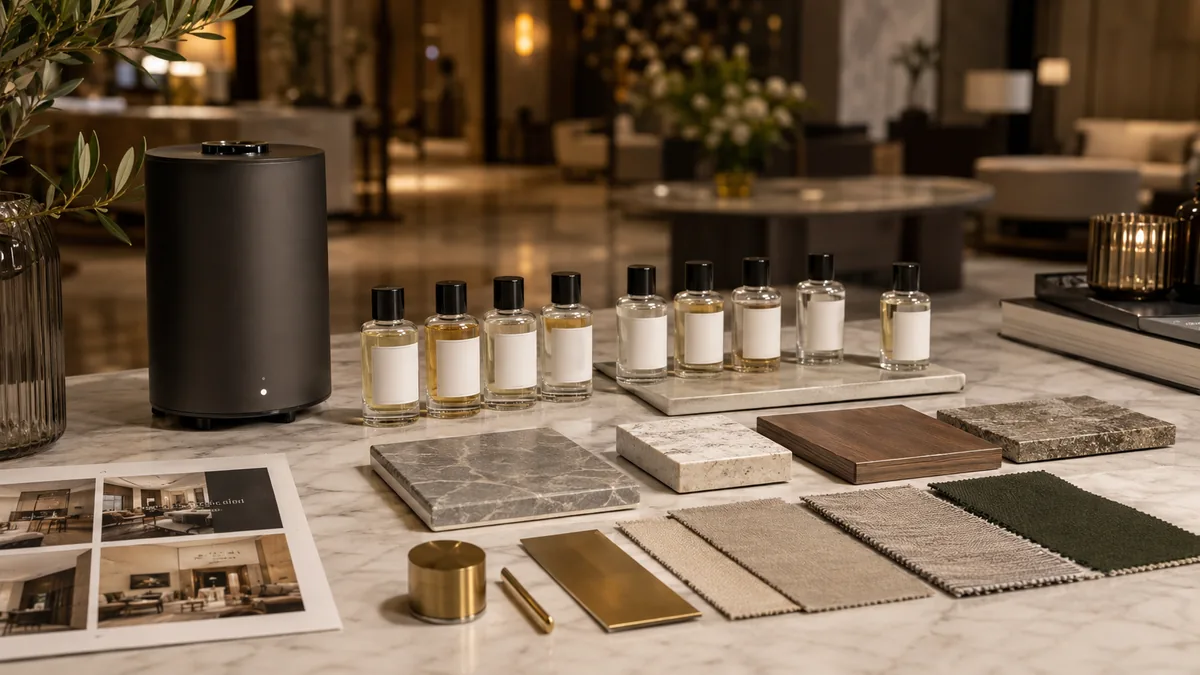
For years, many hotel fragrance projects started with one question: what should our signature scent be?
That question still matters. A memorable hotel scent can support brand recognition, guest memory, and a more polished arrival experience. But in 2026, fragrance conversations are becoming more flexible. Buyers are paying attention to scent wardrobes, scent layering, mood-based fragrance choices, and the idea of scent as part of the whole space, not just a single aroma in the lobby.
For hotels, resorts, spas, serviced apartments, and scent rental companies, this does not mean changing fragrances randomly every week. It means building a more practical fragrance plan: one core scent direction, a few seasonal or zone-based options, and a sample testing process that helps the buyer make decisions in real spaces.
What a Hotel Scent Wardrobe Means
A hotel scent wardrobe is a planned set of fragrance directions used for different spaces, seasons, or guest experiences.
It is similar to how a hotel may use different lighting, music, and materials in the lobby, spa, rooms, and retail corner. The brand feeling should stay consistent, but each area may need a slightly different atmosphere.
For example, a hotel may use a clean woody citrus direction for the lobby, a softer herbal or tea-inspired fragrance for the spa, and a warmer amber or musk direction for a winter campaign. The goal is not to confuse guests with too many smells. The goal is to keep fragrance intentional.
For B2B buyers, this idea is useful because it turns fragrance selection into a system. Instead of asking for twenty random oils, the buyer can request samples based on a clear role:
- Core lobby scent
- Seasonal scent option
- Spa or wellness scent
- Guest room or corridor scent
- Retail, amenity, or private label extension
Why This Matters for Hotel and Wellness Buyers
The recent fragrance trend is not only about personal perfume. Beauty and lifestyle media are now discussing scent wardrobes, fragrance layering, tea-inspired notes, ambient scenting, and scent as a spatial experience. That matters for hotels because guest expectations are moving in the same direction: people are more aware of how scent affects mood, memory, and the feeling of a place.
For hotel buyers, the opportunity is practical. A fixed signature scent may still be the foundation, but it may not be enough for every season, guest area, or brand campaign. A resort may want a brighter summer scent. A spa may need something calmer than the lobby. A boutique hotel may want retail reed diffusers or candles that feel connected to the on-site experience.
This is where fragrance planning becomes more important than simply choosing a diffuser. The buyer needs to think about how scent will be used, where it will be tested, how strong it should feel, and whether the fragrance oil can work with the selected commercial diffuser.
If you are still planning the first step, our guide on how to order fragrance oil samples can help you prepare a clearer sample request before any larger order.
Where Different Fragrance Directions Can Fit
Not every hotel area should smell the same. A scent that feels impressive in a lobby may feel too heavy in a treatment room. A fragrance that feels relaxing in a spa may be too quiet for a retail display. Before choosing samples, it helps to map scent direction by use case.
| Hotel Area | Practical Fragrance Goal | Possible Direction | Buyer Note |
|---|---|---|---|
| Lobby | Create a clean and memorable first impression | Woody citrus, soft tea, fresh floral, light amber | Avoid over-scenting because guests and staff stay in this area often |
| Spa or wellness area | Support calm, slower breathing, and a quieter mood | Herbal, green tea, lavender, soft woods | Test carefully because overly sweet oils may feel distracting |
| Corridor or lift area | Keep the space fresh without becoming noticeable | Clean musk, light citrus, airy floral | Use lower intensity and check airflow |
| Seasonal campaign | Refresh the guest experience during a specific period | Summer tea, winter amber, holiday spice, tropical green | Keep the seasonal scent connected to the hotel identity |
| Retail or gift corner | Extend the hotel memory into take-home products | Reed diffuser, candle, room spray, private label oil | Packaging and scent naming become part of the buying decision |
For buyers comparing real usage, it also helps to understand how much fragrance oil a space may need, because coverage can change how a scent feels after the first impression.
How to Build a Practical Sample Plan
A good sample plan should not be too wide. If a buyer requests too many unrelated fragrance oils, the team may lose the ability to compare them properly.
A more useful approach is to test by role:
- 3 to 5 options for the main lobby direction
- 2 to 3 options for spa or wellness areas
- 1 to 2 seasonal options if a campaign is planned
- 1 private label direction if candles, reed diffusers, or room sprays may be developed later
The sample brief should include the hotel type, target market, room or lobby size, preferred mood, disliked notes, diffuser type if already selected, and expected timeline. This gives the aroma specialist enough context to recommend a focused set of options.
Buyers should also test samples in the real environment whenever possible. A fragrance that smells elegant from a bottle may feel too weak after diffusion, or too sweet after several hours in a warm lobby. Scent needs time, airflow, and human feedback before a larger decision.
If samples are urgent, it is better to say so at the beginning. Sample timing can affect the whole project schedule, especially when a buyer needs internal approval before selecting fragrance oil, diffuser model, packaging, or private label direction. For international buyers, sample shipping from China should be planned early, not treated as the last step.
Common Mistakes to Avoid
One common mistake is treating a scent wardrobe as a large fragrance menu. A hotel does not need too many smells. It needs a few carefully chosen options that have a clear role.
Another mistake is choosing fragrance only from written descriptions. Notes such as citrus, tea, amber, musk, or floral can guide the first selection, but they cannot replace actual testing. The same note family can feel clean, sharp, sweet, dry, heavy, or soft depending on the formula and diffusion method.
Buyers should also avoid using strong scent to solve a weak concept. If the fragrance is too intense, guests may remember it for the wrong reason. For hotel scenting, comfort and consistency are more important than showing off.
A final mistake is separating fragrance oil selection from diffuser selection. Commercial scent diffusers, HVAC scent diffusers, wall mounted units, and cold air diffusion machines may perform differently depending on space size, airflow, and operating hours. The fragrance plan and diffuser plan should be compared together.
What This Means for Scent Diffuser Selection
The diffuser should match the way the fragrance wardrobe will be used.
If the hotel only needs one lobby scent, the selection may focus on coverage, stability, noise level, maintenance, and installation method. If the hotel wants zone-based scenting, the buyer may need several diffuser types or different settings in different areas.
For example, a wall mounted scent diffuser may suit a medium area where installation needs to stay simple. An HVAC scent diffuser may be considered for larger spaces connected to air conditioning. A standalone commercial diffuser may be useful for testing, temporary campaigns, or rental projects.
The key is to avoid choosing the machine before understanding the scenting plan. A diffuser is not just a device. It is part of how the fragrance will be experienced by guests, staff, and repeat visitors.
FAQ
Is a hotel scent wardrobe the same as a signature scent?
No. A signature scent is usually one main fragrance associated with the hotel brand. A scent wardrobe is a small planned set of fragrance directions for different spaces, seasons, or product extensions. The two can work together.
How many fragrance samples should a hotel buyer request first?
For a first round, a focused set of 5 to 10 samples is often more practical than a large random selection. The buyer can divide them by role, such as lobby, spa, seasonal campaign, and private label extension.
Should hotels change scents every season?
Not always. Seasonal scenting is useful only when it fits the brand and operation. Some hotels may keep one main scent all year and test one seasonal variation for a campaign, holiday period, or special guest experience.
What should buyers test before choosing a commercial scent diffuser?
Buyers should test fragrance intensity, coverage, diffusion stability, operating noise, oil consumption, maintenance needs, and whether the scent still feels comfortable after several hours.
Can Scentvita support private label fragrance products for hotels?
Yes. Scentvita can support buyers with fragrance direction comparison, sample planning, diffuser options, and private label fragrance product ideas such as reed diffusers, scented candles, room sprays, or fragrance oils.
Conclusion
The shift from one fixed scent to a more flexible fragrance wardrobe gives hotel buyers a better way to plan guest experience. It does not mean using more fragrance everywhere. It means using scent with clearer purpose.
A good hotel fragrance plan starts with the guest journey, then moves into sample testing, diffuser selection, and possible private label extensions. When these steps are connected, buyers can make fragrance decisions with more confidence and less guesswork.
Work With Scentvita
If you are sourcing aroma diffusers, fragrance oils, or private label scent products for hotels, retail stores, spas, wellness spaces, or branded projects, Scentvita can help you compare suitable fragrance directions, diffuser options, packaging ideas, and sample plans based on your target market.