
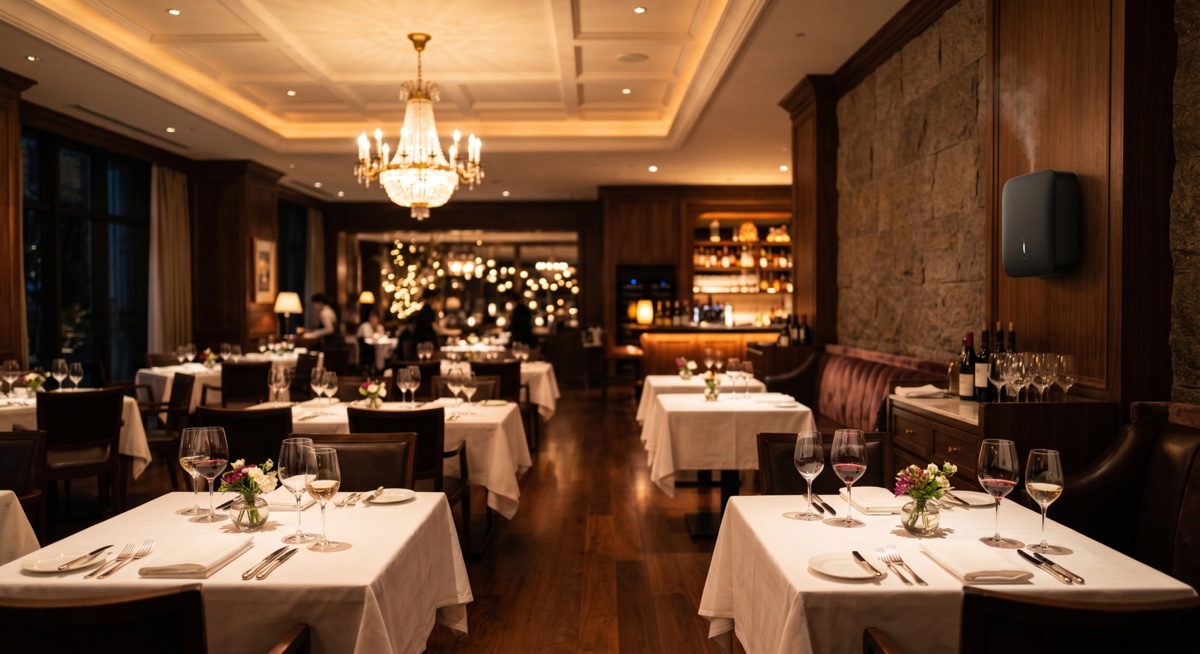
Scent marketing for restaurants is one of the most underused tools in hospitality design. Operators invest heavily in lighting, plating, and music — but ambient aroma works on guests before they sit down. Scent processes through the brain’s limbic system 150,000 times faster than visual input. For restaurant owners, the right fragrance doesn’t just decorate a space — it shapes how hungry guests feel, how long they stay, and whether they come back.
How Scent Influences Dining Behavior
The connection between smell and appetite is neurological, not anecdotal. Warm bakery notes — vanilla, cinnamon, fresh dough — activate hunger responses directly. Citrus notes (lemon, bergamot, grapefruit) increase energy and perceived pace, which matters for quick-service formats. Heavier woods and warm spices slow time perception and encourage guests to linger.
A study in the Journal of Business Research found that a congruent ambient scent in a restaurant setting increased customer dwell time by up to 15%. For a dinner service, that extra time often translates to a dessert order or a second round of drinks.
The IFRA (International Fragrance Association) publishes safety standards for commercial fragrance use — worth reviewing if your venue hosts guests with fragrance sensitivities.
Fragrance Zones in a Restaurant
Not every area should carry the same scent at the same intensity.
Entrance / Waiting Area First impressions happen here. Use your signature scent at medium intensity — enough to register as guests arrive from outside, but not so strong it causes immediate sensory overload. A cedar-and-clean-linen note works for modern fine dining; warm vanilla works for casual comfort food.
Dining Room (Main Floor) Your kitchen already generates food aromas. Ambient fragrance here should complement, not compete. Keep intensity at 20–30% of lobby level. Citrus or light white florals are safe, broadly appealing choices across most cuisine types.
Private Dining and Event Rooms Closed rooms can carry a richer, more memorable profile. Warm amber, soft oud, or sandalwood blends work well for premium event spaces — and are where a custom signature scent makes the strongest brand impression.
Restrooms Completely separate from your dining room profile. White tea, eucalyptus, or light aquatic notes signal cleanliness without bleeding into the main floor fragrance. This detail is small; premium guests notice it consistently.
Scent Marketing for Restaurants: Fragrance Choices by Cuisine Type
Fragrance performs best when it’s congruent with the guest’s expectations. These pairings work across formats:
Fine Dining / Wine Bar — Sandalwood, black pepper, warm amber, light oud. Avoid high-linalool florals (heavy rose, lavender): they interfere with wine aroma perception and can prompt complaints from wine-focused guests.
Casual Dining — Warm vanilla, citrus blend, fresh linen. Approachable, universally appealing, and easy to maintain consistency batch to batch.
Café / Brunch — Bergamot, roasted coffee-and-vanilla, light caramel. These layer naturally with existing coffee aromas rather than fighting them.
Italian / Mediterranean — Basil-and-lemon, fresh herbs, warm olive wood. Congruent with the menu without imitating a specific dish.
Fast Casual / QSR — Bright citrus, mint, clean green notes. Energize rather than relax, supporting faster table turns.
Choosing the Right Diffuser for Your Restaurant
Getting the fragrance right is only half the job.
For dining rooms under 100 m², a standalone cold-air diffuser handles coverage cleanly and silently. For larger open-plan floors — or venues with central HVAC — an in-duct scenting system delivers consistent coverage across the whole space without multiple visible units. We covered the full technical comparison in Cold Air Diffuser vs Ultrasonic: Which Is Right for Your Business?
For restaurant use specifically:
- Cold-air technology is strongly preferred — it works with undiluted fragrance oils, runs silently, and leaves no residue on table linens or upholstery
- Timer control is essential — program lighter citrus for lunch service, warmer notes for evening dinner
- Diffuser placement should be above head height, away from food prep zones, and positioned to work with air circulation patterns in the room
Most restaurant operators order fragrance oil in 1L to 5L sizes once a scent is confirmed. If you’re testing a new profile before committing, our guide on how to order fragrance oil samples walks through the process step by step.
Mistakes to Avoid
Starting at full intensity. Guests need two to three minutes to acclimate when entering from outside. A fragrance hitting immediately at 100% causes sensory overload before anyone reads the menu. Build intensity gradually through the first hour of service.
Imitating the kitchen. Don’t try to replicate your signature dish aromatically. The disconnect between “smelling pasta” and waiting for steak creates subtle cognitive dissonance. The ambient scent should reflect your cuisine category, not a specific item.
One unit for a large open floor. Open-plan dining rooms with high ceilings create scent dead zones in the middle. Plan on one diffuser unit per 80–100 m², positioned to work with existing air circulation.
Ignoring front-of-house staff feedback. Your team spends eight to twelve hours in the space. If headaches start appearing by mid-shift, the intensity is too high — regardless of what the control panel reads. Staff tolerance is the most reliable real-world gauge you have.
Getting Started
Scent marketing for restaurants doesn’t require a large upfront commitment. Most operators start with a single cold-air unit in the entrance or waiting area, run it for two weeks, gather guest and staff feedback, then extend to the main dining floor. The setup cost is low; the impact on first impressions is immediate.
For hospitality buyers sourcing fragrance oils and diffusers together, the process closely mirrors hotel procurement — Best Scents for Hotels covers the broader hospitality sourcing context.
Ready to configure a scent solution for your restaurant? We’ll shortlist fragrance options based on your cuisine type and space size, and arrange samples within 48 hours. Send us your requirements here.