
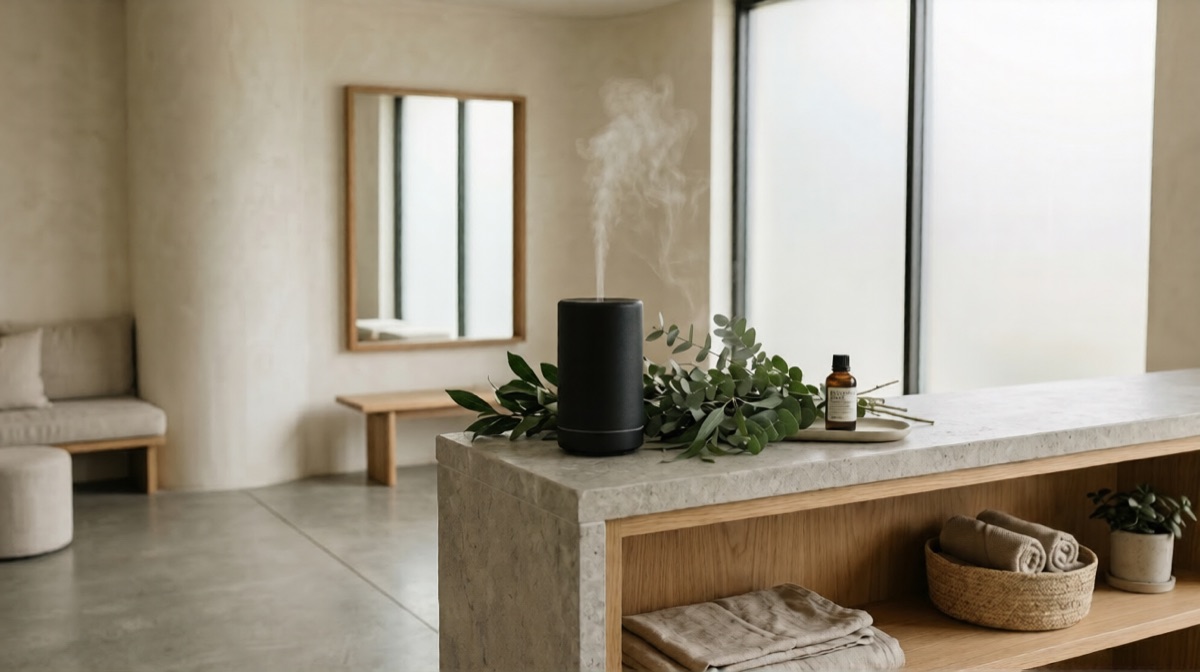
If you run a spa or wellness center, atmosphere drives retention. Scent marketing for spas is one of the fastest ways to create a signature experience — but the wrong fragrance choice can feel clinical, overwhelming, or simply forgettable. This guide covers five proven fragrance directions and the diffuser setups that work behind them.
Why Scent Marketing for Spas Is Different from Retail
Retail scent marketing is designed to increase dwell time and trigger purchases. Spa scent marketing works differently: the goal is emotional reset — helping clients feel they’ve arrived somewhere the moment they walk in.
That changes everything about how you choose and deploy fragrance. According to research on aromatherapy and olfaction, certain scent compounds interact directly with the limbic system — the brain’s emotional center — which is why fragrance shifts mood faster than music or lighting.
For spa operators, that makes your fragrance choice as much a business decision as your treatment menu.
1. Eucalyptus and Mint — The “Clean and Open” Choice
Eucalyptus is the most reliably professional spa fragrance. It reads as clean without being antiseptic, and the camphor notes signal health and care. Pair it with spearmint or peppermint for a cooler, more invigorating variation.
Best for: reception areas, changing rooms, therapy transition corridors.
Diffuser note: run this through a cold-air nebulizing diffuser rather than ultrasonic. Cold air diffusion preserves the lighter top notes in eucalyptus that heat can degrade.
2. Bergamot and Green Tea — The Understated Luxury Choice
If eucalyptus feels too medical for your positioning, bergamot is your answer. It’s citrus-forward but restrained — not a cleaning product, not a fruit stand. Paired with green tea, it creates the scent profile you find in four-star hotel spas.
Best for: treatment rooms, VIP lounges, meditation areas.
This is also one of the strongest choices if you’re building a hotel or hospitality scent program. Bergamot translates across verticals without losing its quality signal.
3. Lavender — The Reliable, Risk-Free Standard
Lavender is overused precisely because it works. The active compounds — linalool and linalyl acetate — have documented relaxation effects. For spas that cater to first-time or anxious clients, lavender removes friction: clients already associate it with calm.
Best for: treatment rooms, floatation pods, relaxation lounges.
The risk: it can feel generic if it’s the only scent in your environment. Use lavender in treatment rooms and differentiate your entrance with something else from this list.
4. Sandalwood and Warm Woods — The Premium Positioning Choice
Sandalwood signals price point immediately. It’s the olfactory equivalent of dark timber and soft lighting. If your spa targets corporate clients, anniversary bookings, or treatments above $150, warm wood scents reinforce the investment clients are making.
Best for: couples suites, high-ticket treatment rooms, retail boutique areas within the spa.
One sourcing note: synthetic sandalwood blends (often labeled “woody amber” or “cashmere wood”) deliver consistent character without the supply variability of natural sandalwood. Most commercial spa applications work best at 15–20% fragrance oil concentration — worth checking before you order at volume. See our guide on fragrance oil wholesale MOQ if you’re setting up a multi-room program.
5. Yuzu or White Tea — The Differentiation Choice
If you want clients to describe your spa as “the one that smells incredible” rather than “the lavender place,” go distinctive. Yuzu — a Japanese citrus — is bright and refined without being sharp. White tea is clean without being cold.
Both work in spas that market around mindfulness, Eastern wellness traditions, or Japandi aesthetics. These scents are also strong word-of-mouth triggers: they’re unusual enough that clients notice and mention them.
Best for: boutique spas, yoga studios with treatment services, wellness retreats.
What Diffuser Setup Actually Works at Spa Scale
Scent marketing for spas depends as much on hardware as fragrance choice.
- Treatment rooms (15–40 sqm): A small cold-air nebulizing diffuser, 20–30% output, on a 20-on/40-off cycle. Subtle presence, not saturation.
- Reception and lobby (40–150 sqm): A mid-sized commercial cold-air diffuser with a timer. Output depends on ceiling height and HVAC airflow.
- Full-floor or multi-room deployment: HVAC-integrated systems. Higher upfront cost, but consistent coverage across zones.
For most operators starting with a single location, a mid-range cold-air diffuser paired with commercial fragrance oil (not pure essential oil) is the most cost-effective entry point. Fragrance oils designed for cold-air diffusion have stable scent profiles, longer run time, and lower per-use cost.
A Note on Procurement
For spa businesses sourcing fragrance oils at commercial volumes, the key factors are: batch-to-batch consistency, low MOQ for initial testing, and a supplier who can advise on concentration levels for your specific diffuser type. Request samples at the concentration you plan to use — a scent that works at 10% may behave very differently at 20%.
To request a matched sample set for your spa, contact Scentvita directly.