
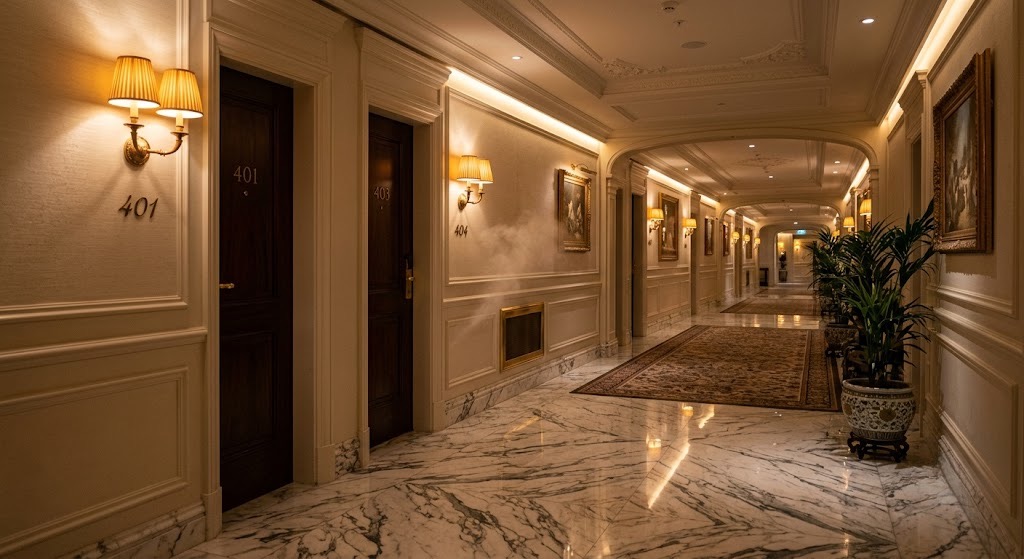
The vacation rental market has become intensely competitive. On any given platform, a guest comparing three similar apartments in the same neighbourhood is making a decision based on photographs, reviews, and a gut feeling. You can optimise your listing photos and respond to every message within the hour — but the moment a guest walks through the door and takes their first breath, the experience is either reinforced or undermined.
Scent marketing for vacation rentals is one of the few levers that works in that first thirty seconds. It’s also one that almost no host is using deliberately.
Why Scent Has an Outsized Effect on Guest Reviews
Vacation rentals live and die by reviews. A single five-star stay generates more future bookings than any amount of paid promotion. And the reviews that mention “atmosphere,” “felt like home,” or “beautifully presented” — those almost always have a sensory component behind them, even if the guest never consciously registers it.
Scent reaches the limbic system — the brain’s emotional and memory centre — faster than any other sensory input. Guests who enter a space that smells clean, intentional, and pleasant are measurably more likely to perceive the whole property as well-maintained and premium. The smell doesn’t need to be strong or obviously present. It just needs to be right.
The inverse is equally true. A property that smells of cleaning products, previous guests, or nothing in particular reads as generic — the kind of place that gets a four-star review and the note “clean but a bit impersonal.”
What Guests Actually Notice
There are two categories of scent experience in a rental property: the ones guests notice consciously, and the ones that work below the surface.
Conscious negative signals — cleaning chemicals, mustiness, pet smell, cooking odours — are what most hosts focus on eliminating. That’s a baseline, not a strategy.
Positive ambient scent is what separates memorable properties from functional ones. It’s not something guests typically write about directly (“the diffuser smelled great”) — it’s something that contributes to the feeling they write about (“the flat had such a lovely atmosphere”).
The most consistent feedback from hosts who have introduced ambient scenting: guests describe the property as cleaner, more premium, and more relaxing — none of which are explicitly about the scent.
Scent Marketing for Vacation Rentals: Fragrance Choices That Work
The goal for a rental property is a neutral-to-welcoming fragrance that appeals to the widest possible range of guests. Unlike a hotel or spa that has a defined brand identity to project, a short-term rental needs to feel like a place anyone could be comfortable in.
Entrance and living area Fresh linen, light cedar, clean cotton, or soft white musk. These communicate “this place is clean and cared for” without announcing themselves. Avoid anything overtly floral or heavily spiced — polarising notes generate polarising responses.
Bedroom Lighter and calmer. Lavender and chamomile are backed by consistent sleep research as relaxation-promoting. At low intensity, they work without being medicinal. For a property targeting premium bookings, light sandalwood or vetiver gives a more sophisticated feel.
Bathroom Completely separate from your living area fragrance. Eucalyptus, white tea, or fresh aquatic — anything that signals cleanliness distinctly. A bathroom that smells like the same fragrance as the living room reads as a single diffuser in the wrong place, not an intentional scent program.
What to avoid Strong food-adjacent notes (vanilla at high intensity, cinnamon), anything that could trigger allergies in guests with sensitivities, and highly recognisable signature scents that some guests will love and others will immediately dislike. When in doubt, err toward clean and neutral.
Choosing the Right Diffuser Format
For rental properties, the format choice matters as much as the fragrance. You need something that works safely and consistently between guest stays, requires minimal intervention, and doesn’t create a hazard or a liability.
Reed diffusers are the lowest-maintenance option. No power required, no timers, no risk of a guest turning off a device or knocking over a candle. A 200–300ml reed diffuser in a well-positioned location — near the entrance, in the hallway, on a bathroom shelf — provides consistent, passive fragrance for four to eight weeks. For hosts managing multiple properties, this is usually the right format: simple to replace at turnover, standardisable across units, no equipment to troubleshoot.
Cold-air electric diffusers give more control over intensity and timing, and are better for larger open-plan spaces where a reed diffuser won’t cover the area adequately. If you’re running a larger apartment or a villa with high ceilings, a cold-air diffuser on a timer is a cleaner solution. We covered the full comparison in Cold Air Diffuser vs Ultrasonic: Which Is Right for Your Business?
For sizing — how much oil you’ll actually go through in a rental property — the calculations are straightforward. A reed diffuser in a 30–50 m² apartment will consume a 200ml bottle in roughly six to eight weeks. An electric diffuser running four hours per day in the same space will use approximately 8–15ml per week depending on output setting. Full consumption figures by space size are in our Fragrance Oil Coverage guide.
Considerations for Multi-Property Hosts
Hosts managing five or more properties face a different challenge: consistency. A scent program that varies from unit to unit reduces the brand coherence that leads to direct repeat bookings.
Standardising on two fragrances — one for living spaces, one for bathrooms — across your entire portfolio makes restocking simple, keeps per-unit costs low through volume, and creates a recognisable sensory identity for guests who stay with you more than once.
At this scale, ordering fragrance oil in 1L or 5L quantities rather than individual bottles significantly reduces per-use cost and restocking frequency. The economics are similar to what hotel groups have understood for years, which we covered in detail in Best Scents for Hotels.
Getting Started
Scent marketing for vacation rentals doesn’t require a large upfront investment. A reed diffuser in the entrance and one in each bathroom — three to four units for a standard apartment — is enough to create a complete and intentional scent experience for under the cost of a single night’s booking.
The return is in reviews, in the “atmosphere” comments, and in the repeat guests who book again because they remember exactly how the property felt.
If you want fragrance recommendations for your specific property type and target guest profile, send us the details and we’ll suggest two or three options with samples available within the week.